Storm Damage Roof Repair in Scranton, PA

Sorting Storm Damage From Ordinary Wear on a Flat Roof
Not every problem a roof shows after a bad storm was actually caused by that storm, and telling the two apart matters because it changes who pays and how the repair gets scoped. We look at every storm damage call with that distinction in mind from the first walk, documenting what the event actually did to the roof separately from anything that was already wearing down before the weather hit.
The Two Storm Patterns That Matter Most Here
Summer thunderstorms rolling off the Poconos and the Endless Mountains are the more common event, and they bring straight-line wind gusts and occasional hail alongside heavy rain. Wind uplift at parapets and roof edges, membrane tears at loose flashing, and debris punctures from anything blown onto the roof are the typical damage pattern from these storms.
The spring thaw is a slower-moving but equally significant event in the Wyoming Valley. When a heavy winter's snowpack lets go fast, drains and gutters that handled routine rain all year can be overwhelmed for days at a time, and the Susquehanna's own flood history in this valley, going back to Agnes in 1972, is part of why drainage capacity gets taken seriously on every roof we scope here. A roof that ponds under that volume of meltwater is under real stress even without a single drop of new rain falling.
What a Storm Damage Assessment Actually Looks At
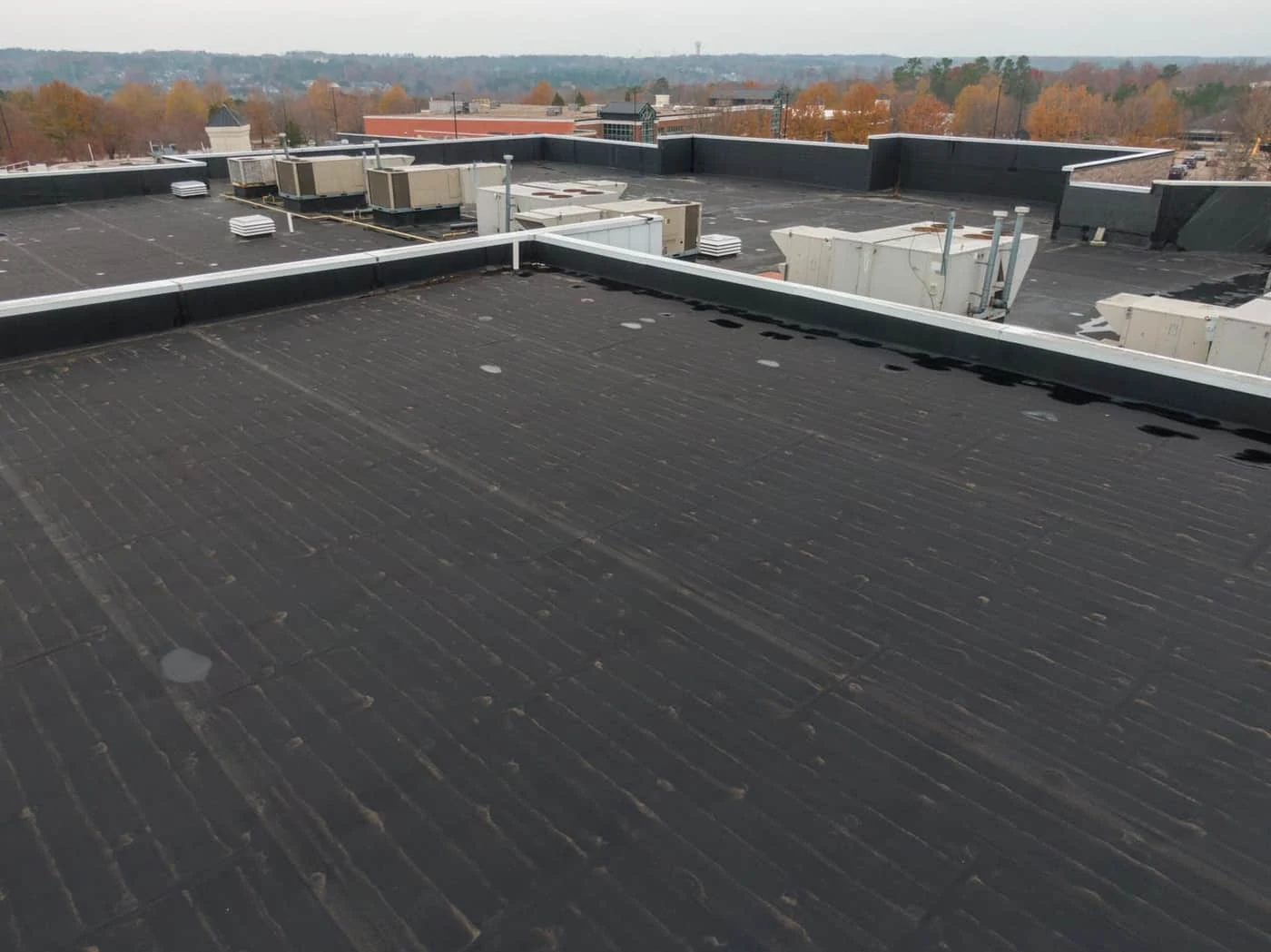
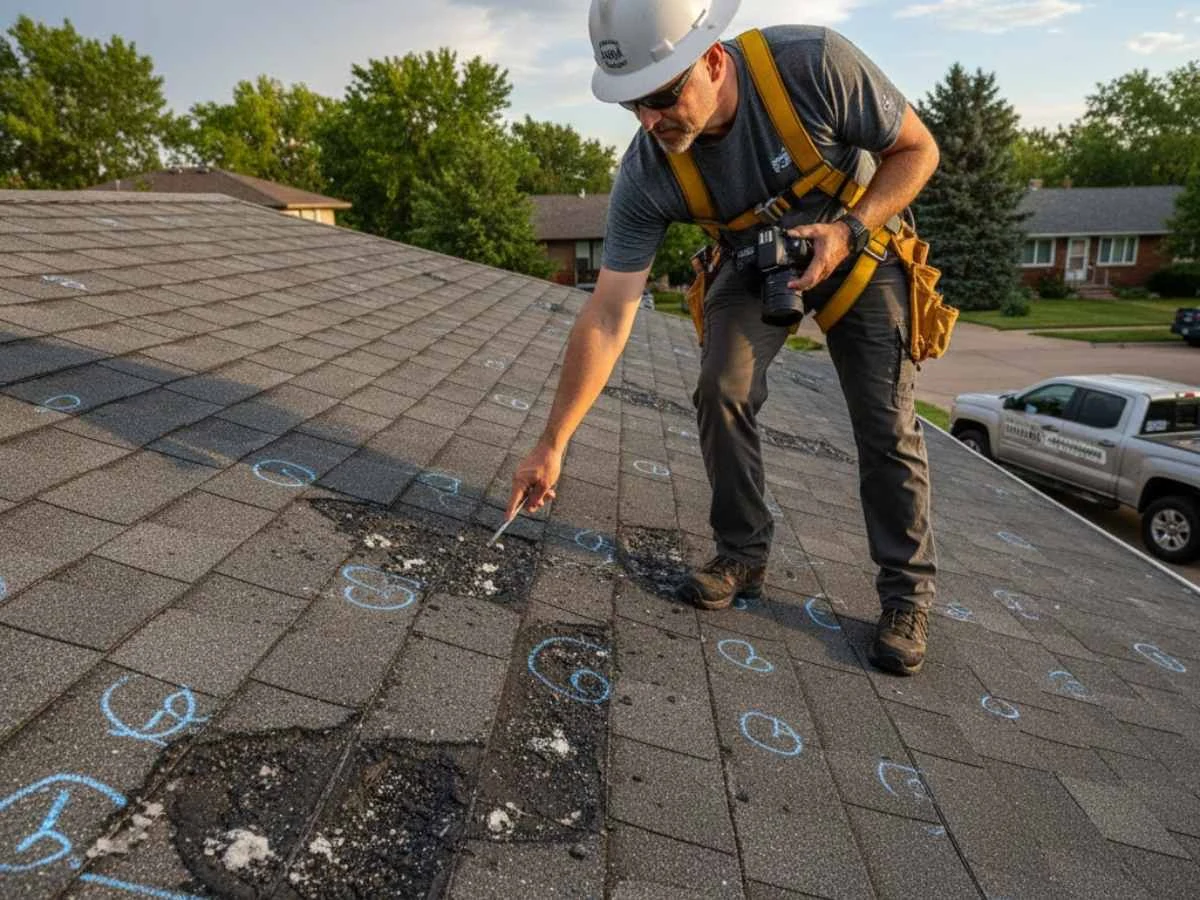
We walk the roof looking for the specific signature of the event rather than general wear. Wind damage shows up as membrane lifted or torn at edges and terminations, fasteners backed out, and flashing displaced in the direction the wind was blowing. Hail leaves bruising or granule loss in a scatter pattern rather than a worn, gradual pattern. A thaw-related ponding event leaves standing water lines and stress at drains rather than damage at the roof edges.
That distinction gets documented clearly because it is exactly what an insurance adjuster will be looking for too. A handful of specific things get recorded on every storm assessment:
- Date and known weather data for the event, cross-referenced against local station records
- Location and pattern of damage mapped precisely against the roof plan, never described in general terms
- Photos of each damaged area alongside undamaged sections for comparison
- Distinction between damage consistent with the event and pre-existing wear found nearby
- Immediate risk items needing emergency dry-in versus items that can wait for scheduled repair
Where an area shows both storm damage and prior wear side by side, we say so plainly rather than blurring the line to make a bigger claim look cleaner. That honesty is what makes the documentation hold up.
From Assessment to Repair
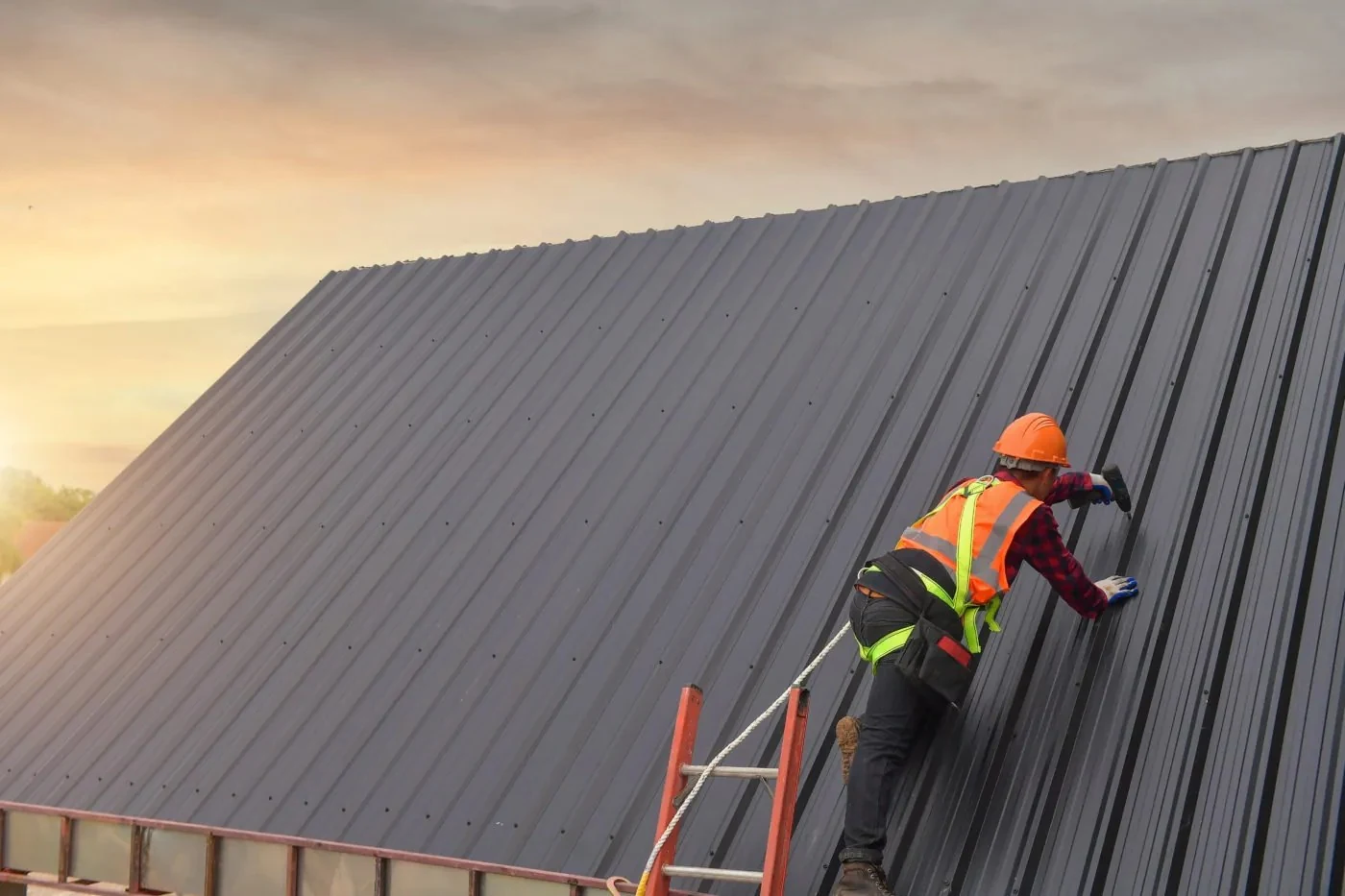
Once damage is scoped, repair priority follows risk, not convenience. Anything actively letting water into the building gets an emergency dry-in first, regardless of what else is on the schedule that day. Damage that is real but not actively leaking gets scheduled into a repair window, usually faster than routine repair work given the storm context.
Repairs address the actual failure mode the storm exposed, whether that is re-terminating lifted membrane edges, replacing displaced flashing, or, on the more significant events, sectioning off a portion of roof for a targeted tear-off and replacement if the storm damage was extensive enough to make patch repair impractical.
What We Do Not Promise
We describe roof condition and storm damage as we find it, in plain terms, backed by photos and a written scope. We do not promise a particular insurance outcome, and any contractor who tells you what your claim will be approved for before the carrier has reviewed it is getting ahead of something that is not theirs to decide. Our job is a clear, honest assessment your team or your adjuster can rely on.
Building Owners' Role After a Storm
The fastest path to a clean repair after a storm event is getting us on the roof quickly, before more weather compounds the damage or before debris and secondary water intrusion make the original event harder to isolate. If you have interior damage already, photograph it as you see it and keep those photos separate from anything unrelated, since that interior timeline helps confirm when the intrusion started.
Storm Damage Questions We Hear Most
How do you tell storm damage from a roof that was already failing?
By the pattern. Storm damage has a signature tied to wind direction, hail scatter, or standing water lines that looks different from gradual, worn deterioration, and we document both separately when we see them together.
How soon after a storm should we get an assessment?
As soon as it is safe to get on the roof. Damage assessed quickly is easier to tie clearly to the event, and any active leak gets protected sooner.
Do you work directly with our insurance adjuster?
We provide documentation the adjuster can use and are available to walk the roof with them if useful, though the claim decision itself is between you and your carrier.
What if the storm only caused minor cosmetic damage?
We will tell you that directly. Not every storm call turns into a claim-worthy repair, and we would rather give an honest minor assessment than inflate a scope.
Can a storm-damaged roof wait until spring for repair?
Anything actively leaking cannot wait. Cosmetic or non-leaking damage can sometimes be scheduled into a normal repair window, and we will tell you which category your roof falls into.
Ready to review the roof scope?
Request a Roof AssessmentRelated Commercial Roofing