
Commercial Roof Replacement Planning in Scranton
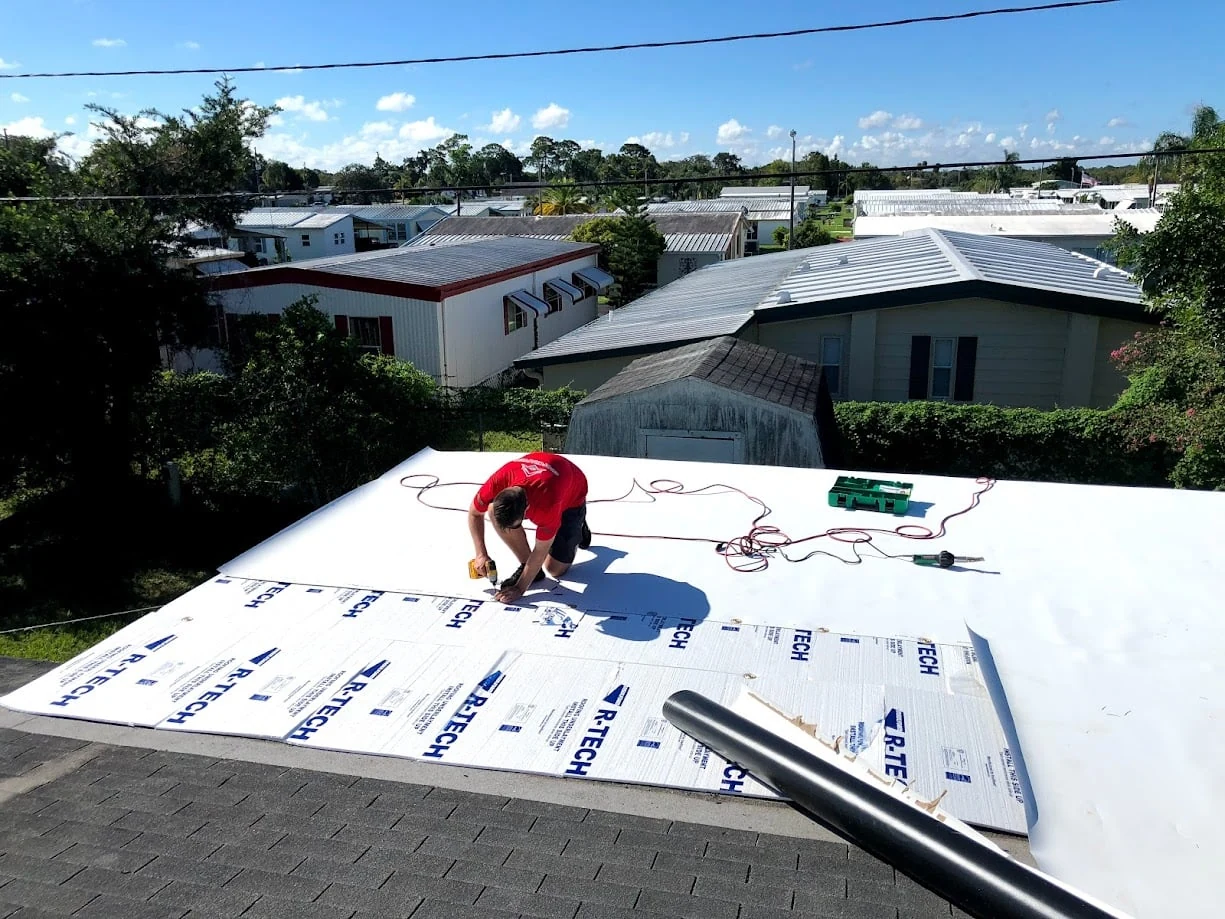
The replacement plan explains tear-off or recover assumptions, insulation and drainage needs, occupied-building phasing, system options, and closeout requirements. A full tear-off is the point in a roofing project where the building is most exposed, and on the scale of roof we work on around Scranton and Wilkes-Barre, that exposure can run to acres of open deck if it is not managed section by section. We treat every tear-off as a demolition schedule first and a roofing schedule second, because the sequence of what comes off and when it gets covered back up is what keeps a distribution center or plant dry through the job.
Staging Demo Around an Active Building
Before a single fastener comes out, we walk the roof against the floor plan below it: which aisles hold product, which mezzanines run underneath, where the HVAC units feed a climate-controlled zone that cannot see a temperature swing. That map becomes the tear-off sequence, starting with the areas of lowest consequence if something goes wrong and finishing over the parts of the building that cannot tolerate any water intrusion at all.
Dumpsters and material staging get placed against the building's actual traffic pattern, not wherever is convenient for the crew. On sites with trailers cycling through fifty or more dock doors a day, that usually means staging on the far side of the yard or on a section of unused pavement the facility identifies ahead of time, so debris hauling never crosses an active loading lane.
How Much Deck We Open on Any Given Day
The core rule on every tear-off we run here is simple: nothing stays open overnight that cannot be sealed by quitting time. We size the daily demo section to the crew's actual dry-in capacity for that day's weather forecast, not to some fixed square footage target. On a clear July day that might be a large section. Ahead of a forecast for a Poconos-fed thunderstorm cell, it is a much smaller one.
This is slower than a full open-deck approach, and we tell owners that up front. It is also the difference between a tear-off that survives a surprise afternoon storm with zero interior damage and one that does not. Given the volume of product some of these buildings hold on any given day, that tradeoff is not close.
What Comes Off, and What Gets Inspected on the Way Down
Tear-off is also the one point in a roof's life where the deck, the insulation, and the structure are all visible at once, so we use it. As membrane and insulation come up, the crew is checking for a specific set of conditions before anything new goes down:
- Deck corrosion or fastener pull-out from long-term moisture trapped under old insulation
- Soft or delaminated insulation boards, especially near roof drains and low slope areas
- Parapet and curb flashing that was patched rather than properly terminated in a prior repair
- Structural steel or joist condition where roof leaks have been dripping onto it for years
- Signs of prior ice dam damage at the eaves and any low-slope valleys
- Old penetrations, abandoned equipment curbs, and vents that should be removed, not reroofed around
Anything found gets photographed and logged before it is covered, which matters later if the owner needs that record for insurance, for a capital planning file, or just for their own maintenance history on the building.
Replacement: Getting the New System Down Right
Once a section is clean deck, insulation goes down tapered to daylight at every drain, and membrane goes down and gets seamed the same day wherever possible. We do not let insulation sit exposed overnight without at least a temporary membrane over it, because a sudden line of showers off the Endless Mountains does not check the forecast before it forms.
Flashing details at parapets, curbs, and penetrations get built to hold up against wind uplift and against snow sliding or drifting against them come winter, since those are the details that fail first on roofs in this region. We would rather spend an extra hour on a corner flashing detail during the tear-off than send a crew back out in January to chase a leak at that same corner.
Coordinating With Your Operation, Not Around It
Facility teams running a distribution operation live and die by dock door availability, so before a tear-off starts we sit down with the ops manager and build a door-by-door schedule for the job. Doors under active tear-off get flagged, doors nearby get noise and dust notices, and everything else stays exactly as it was. On plants with production lines instead of dock doors, the same logic applies to whichever zones are noise- or vibration-sensitive.
We keep that communication running daily during the job rather than treating kickoff as the last check-in, because a facility's own schedule shifts week to week and the roof schedule needs to bend with it where it reasonably can.
Tear-Off Questions Facility Managers Ask Us
How do you keep our building dry if a storm hits mid-demo?
By never opening more deck than we can seal that day. If weather turns faster than forecast, temporary dry-in goes down on whatever section is open before the crew leaves.
Will tear-off debris interfere with our trailer traffic?
No. Dumpster placement and haul routes are set against your actual dock door and trailer pattern before work starts, and they get adjusted if your yard usage changes mid-project.
What if you find deck damage we did not know about?
We stop, document it with photos, and bring it to you before covering anything up, along with a straightforward cost and time impact so there are no surprises on the invoice.
Can tear-off happen while our production line is running?
Often yes, with sequencing planned to keep noise-sensitive and vibration-sensitive zones covered separately. We will tell you plainly if a specific area of the roof needs a planned downtime window instead.
Do you reuse any of the old flashing or curbs?
Rarely. Tear-off is the point where old, patched flashing gets replaced properly rather than reroofed over, since that is usually where the next leak would start.
Treat each roof assembly on its own terms
Roof-system identification changes the diagnosis. Around Scranton, the target page inventory includes Modified Bitumen Sbs, Silicone Roof Coating, and EPDM Black, each with its own seam, flashing, fastener, and compatibility questions. Preparation and repair language must fit the substrate. Cleaning, drying, reinforcement, fastening, priming, welding, adhesion, and cure requirements should not be copied from one roof system to another without verification. A localized defect may be repairable while saturated insulation or chronic ponding changes the wider recommendation. That is why roof construction and moisture evidence must be connected to when replacement is necessary, whether recover remains viable, which assembly fits the building, and how the work belongs in the ownership budget.
Roof work has to fit real operations
A technically correct detail is only part of the job at Scranton properties such as Insurance Restoration, Logistics 3Pl, and Commercial Real Estate REITs. The plan also has to protect people, inventory, equipment, and normal access below the roof. Document roof access, sensitive rooms and inventory, deliveries, public entrances, tenant hours, exhausts and air intakes, interior evidence, and the route used to move tools and debris. These conditions belong in the written scope before scheduling. A dry-in can be appropriate during active weather even when permanent work must wait. The crew's daily record should identify every temporary edge, cover, ballast, drain protection, and remaining exposure before leaving the property.
Make repair, restoration, and replacement distinct decisions
The decision point is when replacement is necessary, whether recover remains viable, which assembly fits the building, and how the work belongs in the ownership budget. The evidence may support a small permanent repair, a broader corrective scope, a restoration evaluation, recover design, or tear-off, but the report needs to show why. The option matrix should address present failure, remaining risk, investigation still required, installation disruption, anticipated service interval, and future maintenance. Unknown inputs should be visible rather than buried in an allowance. This prevents an urgent call from becoming an automatic reroof pitch. It also prevents endless patches from consuming money on a roof whose moisture, failures, or lifecycle cost has crossed a reasonable replacement threshold.
Turn the visit into a usable next step
The practical handoff is a capital plan and future service schedule for the new roof rather than a project that ends at installation. The next person should receive the property address, roof-area identifiers, contacts, access notes, photographs, temporary measures, completed work, open recommendations, and timing. A persistent roof file connects dates, weather, symptoms, findings, repairs, costs, and follow-up. Trends become visible: recurring locations, growing wet areas, drainage issues, or a rising frequency of unrelated failures. Commercial Roofing of Scranton can keep inspection and maintenance active while repair, restoration, or replacement moves through a separate project opportunity. The path remains response, evidence, the right scope, closeout, and the next scheduled roof decision.
A useful response starts before roof access
A useful intake for Commercial Roofing of Scranton identifies who can grant access, where water is entering, what operations are affected, whether electrical or ceiling hazards exist, how the symptom changes with weather, and which roof records or photographs are available. Interior photographs can preserve stain limits and active-drip locations before ceiling materials are moved. Roof photographs from facility staff may help with orientation, but they do not replace safe field verification or authorize untrained personnel to enter the roof. That intake determines whether the immediate need is interior protection, controlled roof access, weather-limited stabilization, drainage attention, or a scheduled diagnostic visit. It also gives the crew a safer and more focused starting point.
Price the known work without hiding the unknowns
The owner should see the boundary between the base scope and contingent work. That includes moisture limits, substrate repair, additional layers, damaged deck, blocked piping, inaccessible details, hazardous materials, and work by other trades. Schedule assumptions also belong beside price: weather windows, material lead time, permits, shutdowns, tenant coordination, daily dry-in, and access restrictions. An unexplained low number can become an expensive sequence of changes if these constraints are omitted. Closeout requirements should be priced as part of the work: final photographs, repair locations, warranty or material records, open punch items, and the next recommended inspection. Those documents keep the completed scope connected to the roof plan.
How Scranton operating conditions shape the review
Scranton roofs work through seasonal rainfall, wind, rooftop temperature movement, and changing access conditions. That exposure guides the field sequence, but it does not by itself explain widespread wet insulation, exhausted details, repeated failures, incompatible repairs, unsafe deck conditions, or lifecycle costs that no longer support continued patching. The review should connect the time and location of water entry with roof zones, elevations, drainage paths, and construction transitions. That map helps distinguish one isolated defect from several conditions activated by the same rainfall. A useful report does not hide uncertainty. It names the unverified areas, explains why they were inaccessible, and states which follow-up observation or test would resolve the question.
Build a roof record another decision-maker can use
For Commercial Roofing of Scranton, the field file should capture existing roof layers, moisture and core information, deck condition, code and insulation assumptions, drainage, edge metal, equipment, access, phasing, alternates, warranty basis, and closeout requirements. Each note needs a roof-area reference so a photograph or recommendation can be found again after the visit. The field sequence is to verify the assembly and deck, define tear-off or recover limits, coordinate drainage and penetrations, plan temporary protection, and phase the work around building operations. Photographs should show context and detail, and test locations should explain what question was being answered and how the opening was closed. Temporary protection, permanent repair, routine maintenance, and capital recommendations belong in separate sections. This keeps a successful dry-in from being mistaken for the completed repair and lets competing proposals be compared on the same basis.
Scranton decision checklist
- Map the interior symptom to a named roof area before selecting a repair detail.
- Record temporary measures separately from permanent work and list every open item.
- Verify drainage, penetrations, walls, edges, earlier repairs, and transitions around the affected area.
- State the observed roof assembly, unknown construction, access limits, and testing assumptions.
- Connect the recommendation to repair, restoration, replacement, maintenance, or capital-planning thresholds.
- Set the next inspection or follow-up date so the roof history continues after this visit.
Commercial roof decision questions
Does this condition automatically mean the roof must be replaced?
No. The review should establish when replacement is necessary, whether recover remains viable, which assembly fits the building, and how the work belongs in the ownership budget. Replacement becomes a defensible recommendation only when the field evidence, moisture, assembly condition, repair history, deck or attachment concerns, and lifecycle comparison support it.
What should the Scranton roof scope document?
It should document existing roof layers, moisture and core information, deck condition, code and insulation assumptions, drainage, edge metal, equipment, access, phasing, alternates, warranty basis, and closeout requirements. It should also label temporary and permanent work separately, state assumptions and exclusions, and identify the inspection or service step that follows the current scope.
How does an urgent call become a maintenance or capital plan?
The immediate visit creates the first roof-area record. A follow-up inspection establishes condition and priorities. Completed repairs, recurring observations, drain service, warranties, and future recommendations are then retained so maintenance stays scheduled and larger work can be placed into the appropriate capital year.
From service call to roof plan
Use the next decision, not the biggest sale.
Stabilize the problem, document the roof, compare the viable paths, and keep the resulting roof history active.
Water is entering nowEmergency Roof ResponseDocument condition and causeCommercial Roof InspectionDefine the permanent repairCommercial Roof Leak RepairTest whether service life can be extendedRoof Restoration and CoatingSequence roofs and future budgetsRoof Asset Management and Capital PlanningKeep inspections and small work scheduledPreventive Roof Maintenance