Modified Bitumen Roofing in Scranton, PA
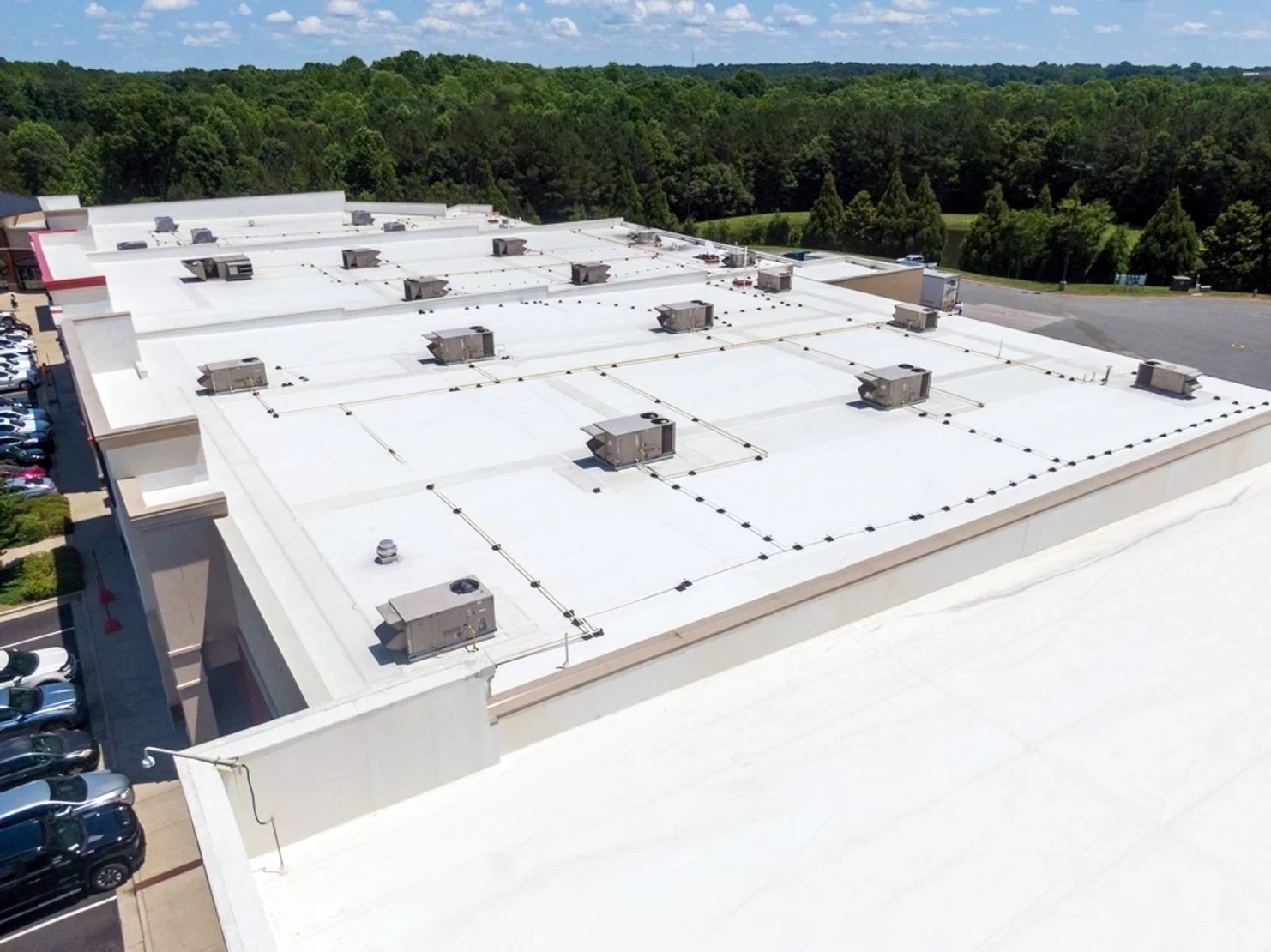
Modified Bitumen for Downtown Scranton's Older Roof Stock
Downtown Scranton and Wilkes-Barre are full of brick and stone buildings from the anthracite and rail era, most carrying decades of patched, layered roofing on top of the original deck. Modified bitumen is the system that fits how these buildings are actually built, and how they need to stay open while the roof gets fixed.
Built-In Redundancy for Century-Old Roof Decks
A lot of these older buildings have wood plank decking, uneven roof heights from additions over the decades, and roof drains that were never resized as the building changed use. Modified bitumen's multi-ply, multi-layer nature gives redundancy that a single-ply membrane cannot match on a deck with this many quirks.
Layered bitumen sheets also tolerate movement in an old deck better than a rigid single membrane would, which matters on buildings where the original framing has settled or flexed over a hundred years of use.
Torch-Applied, Self-Adhered, or Cold Process
Torch-applied modified bitumen gives the strongest bond and is common where the building and conditions allow open flame work. Self-adhered systems trade a little bit of bond strength for a much lower fire risk, which makes them the better call on occupied buildings downtown where tenants are working below and an open torch is not something a landlord wants near the roof deck. Cold process adhesives split the difference and work well in colder install windows during the shoulder seasons.
We choose the application method from the building's occupancy status and the time of year first. A vacant building getting a full reroof in August is a different conversation than an occupied storefront in downtown Carbondale getting patched in November.
Access is another factor unique to these older buildings. Many downtown structures share party walls with neighboring properties and have no dedicated roof hatch or freight elevator, so material handling to the roof deck itself becomes part of the planning conversation before work ever starts.
Working Roofs That Sit Over Occupied Storefronts
Most of the buildings we work on downtown have retail, offices, or apartments below the roof deck, and none of them close for a reroof. Self-adhered modified bitumen lets us work without the smell and heat of a torch crew, which matters directly to a business owner running a shop on the ground floor while we work above.
We also stage material and sequence tear-off in small sections on these buildings, since most downtown roofs are smaller footprints than a suburban warehouse. A partial roof exposed overnight on a 4,000 square foot downtown building is a much bigger relative risk than the same exposure on a 300,000 square foot distribution center, so we close in each section before moving to the next.
Ice Damming at Parapets on Older Buildings
Downtown buildings with parapet walls and internal drains are prone to ice damming during a Northeastern Pennsylvania winter freeze-thaw cycle. Snow melts near warmer interior areas of the roof, runs toward the parapet, and refreezes at the cold edge, backing water up under old flashing.
We address this with flashing detail and drainage checks specific to each building's parapet configuration, not a standard fix. Buildings in Carbondale and Nanticoke, both up-valley from Scranton at slightly higher elevation, tend to see this problem more severely than buildings closer to the valley floor.
Plymouth, another former mining town along the Susquehanna, has similar older brick stock with internal drains that were sized for a much lighter rain event than what a modern storm can deliver, so drain capacity gets checked alongside the ice damming question rather than treated separately.
Matching New Modified Bitumen to Existing Patch Work
A downtown roof that has been patched by different contractors over 30 years rarely has one consistent system across the whole deck. Before quoting a repair or partial replacement, we identify what is actually on the roof, layer by layer where possible, so new material bonds correctly instead of failing at a transition point within a year. Common findings on these older roofs include:
- Multiple generations of asphalt-based patching applied without proper prep
- Old coal-tar pitch sections mixed with newer asphalt modified bitumen
- Flashing metal that has never been replaced since original construction
- Drains partially blocked by decades of granule and debris buildup
- Wood blocking at parapets that has rotted beneath intact-looking membrane
Skipping that diagnostic step is how a new roof section ends up failing at the seam with old material within the first season, and we would rather spend the extra time upfront than come back to a callback.
Modified Bitumen Questions From Downtown Property Owners
Can you install modified bitumen without a torch on an occupied building?
Yes, self-adhered systems avoid open flame entirely and are our default recommendation for occupied downtown buildings with tenants working below.
How do you handle a roof with several old repair layers already on it?
We inspect and often core cut to understand what is actually there before quoting, since matching new material to unknown old layers is where most premature failures start.
Does modified bitumen handle ice damming better than other systems?
The membrane itself is not the full solution. Proper flashing and drainage detail at parapets matters more than membrane choice for solving an ice damming problem specifically.
How long does a modified bitumen reroof take on a typical downtown building?
Downtown buildings are usually smaller footprints than suburban warehouses, so most projects move faster, often within a week or two depending on complexity and weather.
Can you work in cold weather without waiting until spring?
Cold-process adhesive systems allow installation in a wider temperature range than torch or standard adhesive methods, which helps on a repair that cannot wait for warmer weather.
Ready to review the roof scope?
Request a Roof AssessmentRelated Commercial Roofing