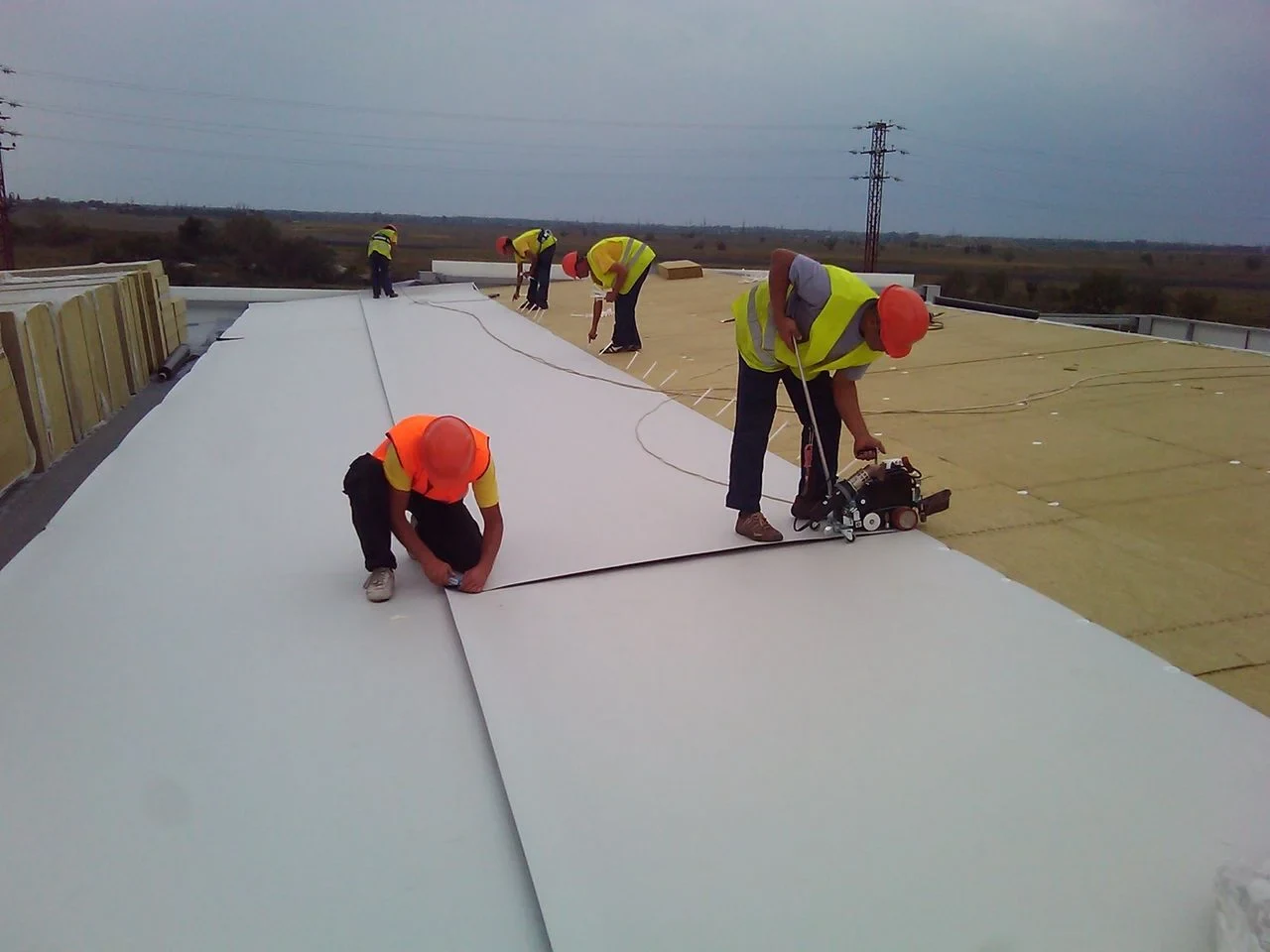
Metal R-Panel Roofing in Scranton, PA
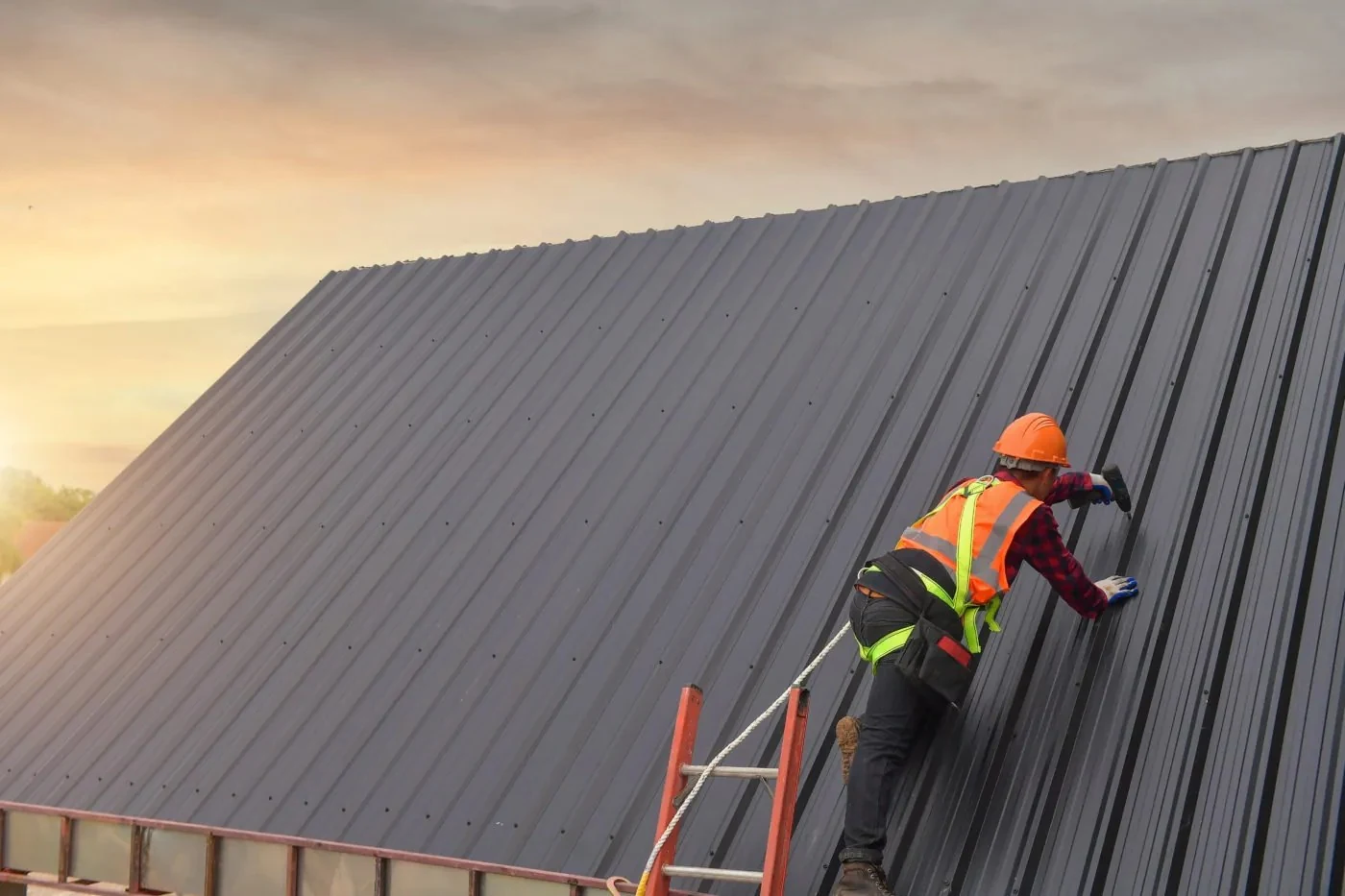
R-Panel Metal Roofing for Flex and Truck Terminal Buildings
R-panel is the utility workhorse of metal roofing. It costs less than standing seam, installs faster, and holds up well on the flex buildings, truck terminals, and light industrial structures that make up a lot of the older industrial stock around the airport corridor and the riverside flats.
R-Panel for Flex Buildings and Truck Terminals
The riverside industrial flats in Duryea and the freight terminal buildings around Avoca and Dupont, both sitting near the Wilkes-Barre/Scranton International Airport, are largely functional structures where cost per square foot and fast install matter more than architectural appearance. R-panel's exposed-fastener trapezoidal profile is a proven fit for that kind of building, and it has been the default choice on light industrial construction in this region for decades.
These buildings also tend to have simple gable rooflines without the complex geometry that would justify standing seam's higher fabrication cost. A straightforward rectangular truck terminal roof is exactly where R-panel earns its lower price point without giving up meaningful performance.
Exposed Fastener Systems and Long-Term Maintenance
R-panel's exposed fasteners are also its main long-term maintenance item. Each screw penetration has a rubber washer that degrades with UV exposure and thermal cycling over years, and a roof with thousands of fasteners will eventually need washer replacement to stay watertight. We factor this into every R-panel recommendation: it is a lower upfront cost system with a known future maintenance line item, not a lower cost system with no tradeoff at all.
A fastener inspection and re-torque or replacement cycle every several years keeps an R-panel roof performing well past what an owner gets by ignoring it until leaks show up at multiple points across the field.
Sealant at panel laps ages on a similar timeline to the washers. On buildings we inspect that have gone a decade or more without maintenance, dried and cracked lap sealant is almost always present alongside worn fastener washers, and the two failures compound each other once water starts finding a path through both.
Panel Gauge and Wind Uplift Near the Airport Corridor
Buildings near the airport corridor in Avoca and the surrounding freight and logistics area see open exposure with fewer windbreaks than a downtown building tucked between neighbors. Panel gauge and fastener spacing need to account for that wind exposure specifically, not use a generic spec pulled from a catalog.
- Heavier gauge panels for open, exposed sites versus sheltered locations
- Tighter fastener spacing at roof edges and corners where uplift pressure concentrates
- Proper eave and ridge closure details to prevent wind-driven rain intrusion
- Correct panel overlap direction relative to prevailing wind and rain patterns
- Structural purlin spacing checked against the panel's actual load rating
Skipping this analysis and defaulting to a standard spec is how panels lift at the edges during a strong wind event, which we see occasionally on older buildings that were under-specified when originally built decades ago.
R-Panel vs Standing Seam for Industrial Buildings
The honest comparison comes down to visibility, budget, and roof geometry. A truck terminal or warehouse roof that nobody sees from the road, on a tight construction budget, is a good fit for R-panel. A professional building with a visible roofline and a budget that supports it is usually a better fit for standing seam's concealed fastener system and cleaner appearance.
We also see buildings where a mix makes sense: R-panel on the main warehouse structure and standing seam on a smaller, more visible office addition at the front of the property. That combination shows up more than people expect on flex buildings around this market.
Retrofitting an Aging R-Panel Roof
A lot of the older industrial buildings in this region still carry original R-panel roofing installed decades ago, and much of it is repairable rather than in need of full replacement. Fastener replacement, seam sealant renewal, and targeted panel replacement where corrosion or physical damage has occurred can extend service life significantly at a fraction of a full tear-off cost.
We inspect the panel substrate for rust-through before recommending repair, since a panel that looks fine on the exterior coating can still be structurally compromised underneath if moisture has been working through fastener penetrations for years.
Where full replacement is the right call, we generally recommend it happen with the building running normally rather than shut down, since these are exactly the kind of freight and light industrial buildings where a closed dock door means lost revenue. Panel installation moves quickly enough on a straightforward gable roof that a phased approach rarely adds significant time to the project.
R-Panel Metal Roofing Questions
How does R-panel compare in cost to standing seam metal?
R-panel typically costs meaningfully less in both material and labor, which is why it remains the standard choice for utilitarian industrial and flex buildings.
How often do exposed fasteners need to be replaced?
It varies by exposure and panel age, but a fastener inspection every several years catches washer degradation before it turns into active leaks across the roof field.
Can you repair an older R-panel roof instead of replacing it?
Often yes, depending on the condition of the panel substrate underneath the coating. We check for corrosion before recommending repair over full replacement.
Does R-panel hold up to the wind exposure near the airport corridor?
Yes, when panel gauge and fastener spacing are specified correctly for that open exposure. Under-specified installs from decades ago are where we see problems.
Is R-panel a good fit for a building with a visible public-facing roofline?
Usually not if appearance is a priority. We typically recommend standing seam for visible sections and reserve R-panel for functional, less visible roof areas.
Ready to review the roof scope?
Request a Roof AssessmentRelated Commercial Roofing