EPDM Commercial Roofing in Scranton, PA
EPDM for Older Industrial Buildings in Taylor and Hanover Township
Rubber membrane is not the newest system on the market, but it is still the right answer for a lot of the manufacturing and flex space stock around this region. We install and repair EPDM on buildings where its flexibility and repair simplicity outweigh what newer membranes offer.
Where EPDM Still Makes Sense in This Market
The industrial parks that grew up decades ago, places like the Stauffer Industrial Park in Taylor, Hanover Industrial Estates in Hanover Township, and the older sections of Crestwood Industrial Park in Mountain Top, are full of buildings originally roofed in EPDM. When a section needs repair or a full replacement, matching or upgrading within the same membrane family often makes more sense than switching systems entirely.
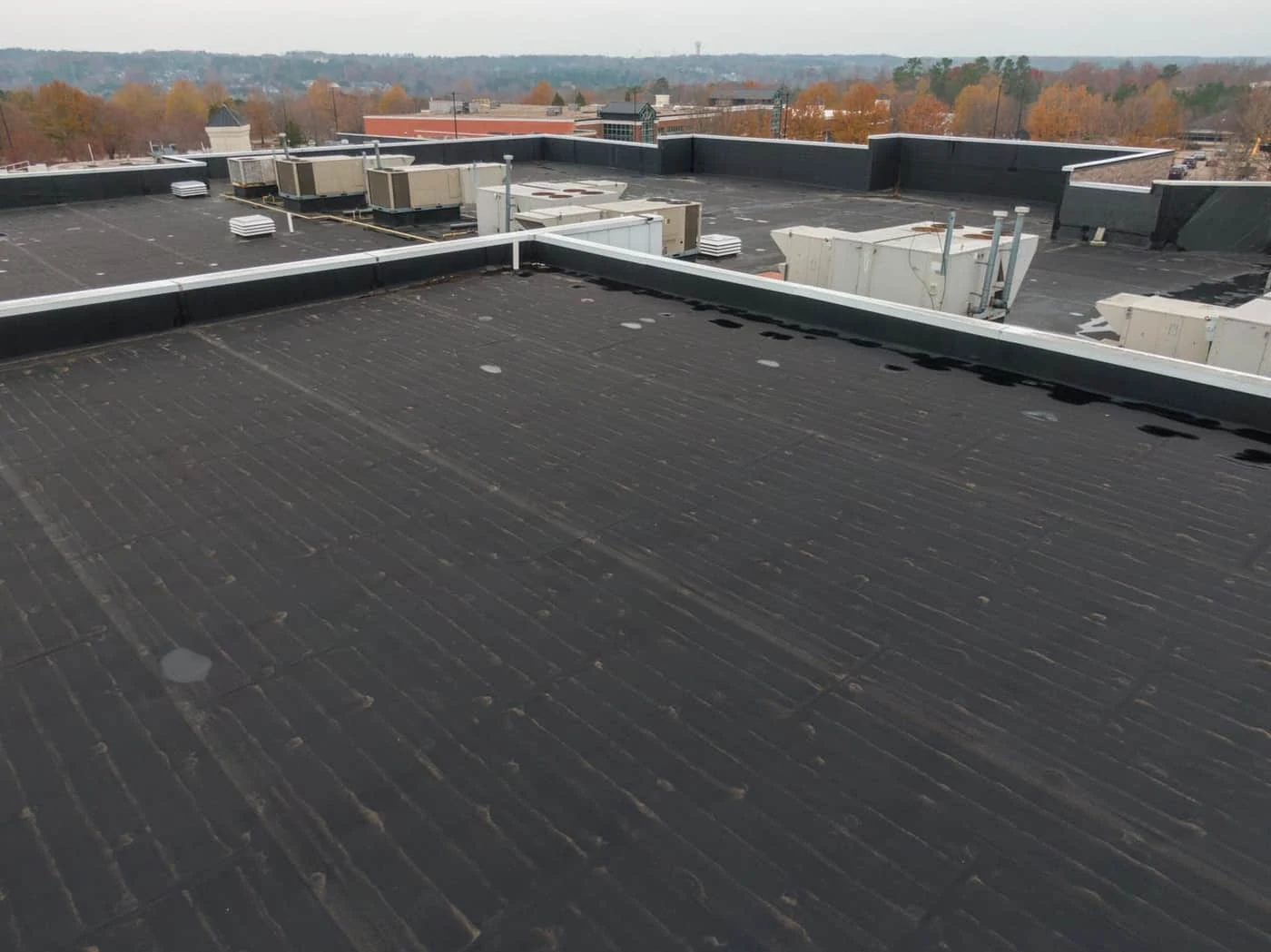
EPDM also holds up well on buildings with irregular rooflines, older HVAC curbs, and structural quirks from decades of additions. The Mid Valley industrial sites around Olyphant have a lot of that mixed-vintage construction, and rubber membrane flexes around those details better than a rigid alternative.
Black Membrane vs White Membrane in a Snow Climate
Black EPDM absorbs solar heat, which sounds like a downside until you consider a Northeastern Pennsylvania winter. That heat gain helps shed snow and ice faster on a black roof than a white one, which matters on a building where standing snow load is more of a structural concern than summer cooling costs.
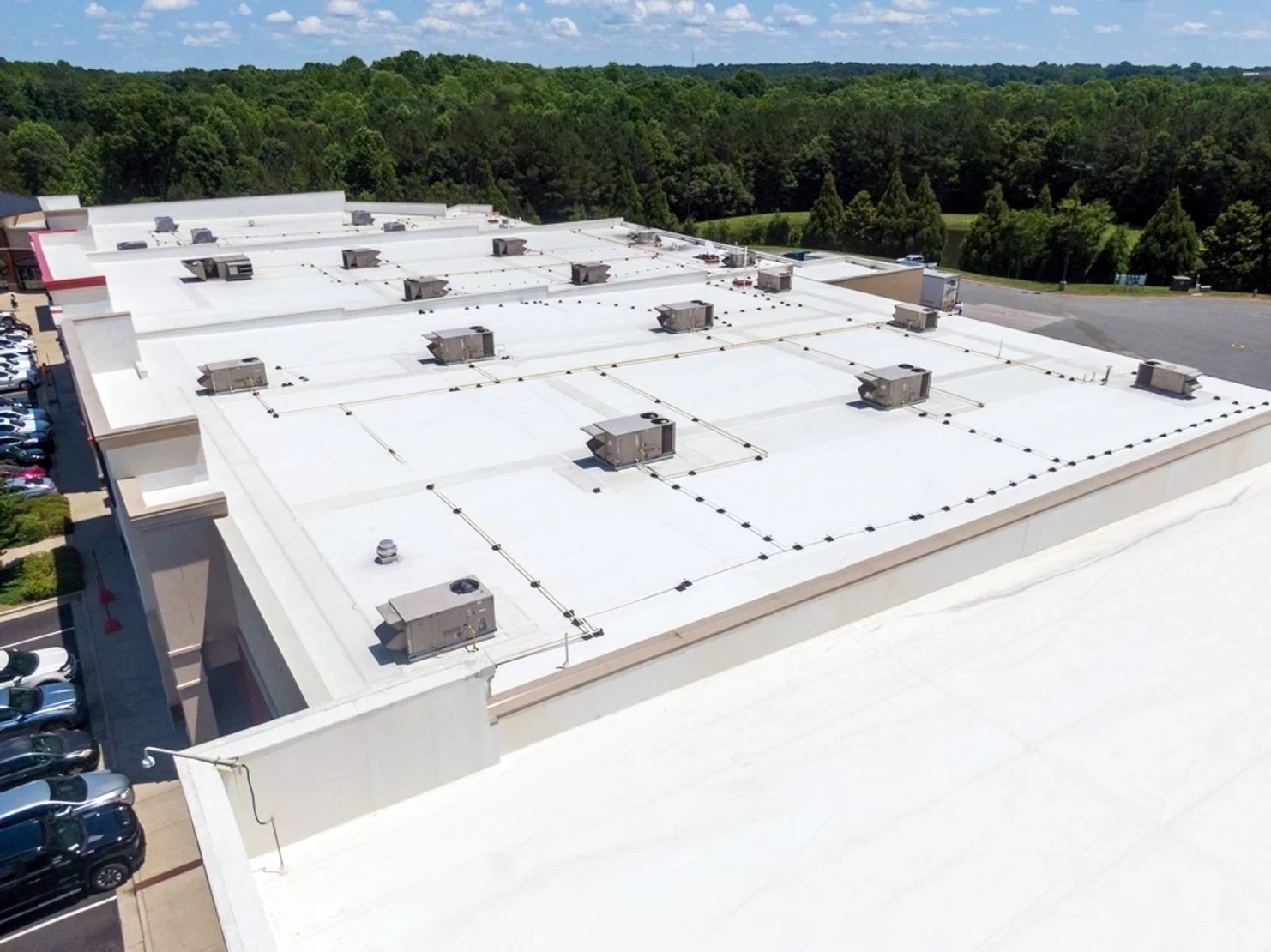
White EPDM exists and gets specified on buildings with heavy air conditioning loads, but for a lot of the manufacturing space in this market, where interior process heat already runs high, the black membrane's winter behavior tends to win the argument.
Ballasted, Mechanically Attached, or Fully Adhered
The attachment method matters as much as the membrane color. Ballasted EPDM, held down with stone or paver ballast, works well on structurally sound buildings that can carry the extra dead load and need a lower-cost install. Mechanically attached systems fit buildings where ballast weight is not an option. Fully adhered EPDM costs more but performs better in higher wind-exposure locations, including elevated sites near Mountain Top and the ridgelines around Archbald.
We choose the attachment method from the building's structural capacity and wind exposure first, then work backward to what fits the budget, not the other way around.
Flexibility Through Freeze-Thaw Cycles
EPDM's real advantage in this climate is elasticity. Rubber membrane expands and contracts with temperature swings without the seam stress that stiffer materials can develop over repeated freeze-thaw cycles. A building that swings from single digits in January to a 50-degree thaw and back within the same week puts real stress on a roof, and EPDM tolerates that movement better than most alternatives on the market.
That flexibility also shows up around penetrations. Older manufacturing buildings often have pipe penetrations, curbs, and equipment stands added over the years by different contractors, and EPDM's pourable sealer pockets and flashing details adapt to that patchwork more forgivingly than a heat-welded system would.
Patching a Legacy EPDM Roof vs Replacing It
Not every EPDM roof with a leak needs full replacement. A lot of what we handle is targeted repair: seam splicing where old lap adhesive has failed, flashing replacement around aged curbs, and patch work at fastener backout points. That kind of repair work makes sense when:
- The membrane itself still has usable life left below the visible surface
- Leaks trace to isolated seam or flashing failures rather than widespread membrane fatigue
- The building's ownership timeline makes a full replacement cost hard to justify right now
- Insulation underneath is still dry and performing, confirmed by a core cut, not a guess
- The roof deck itself shows no structural deterioration
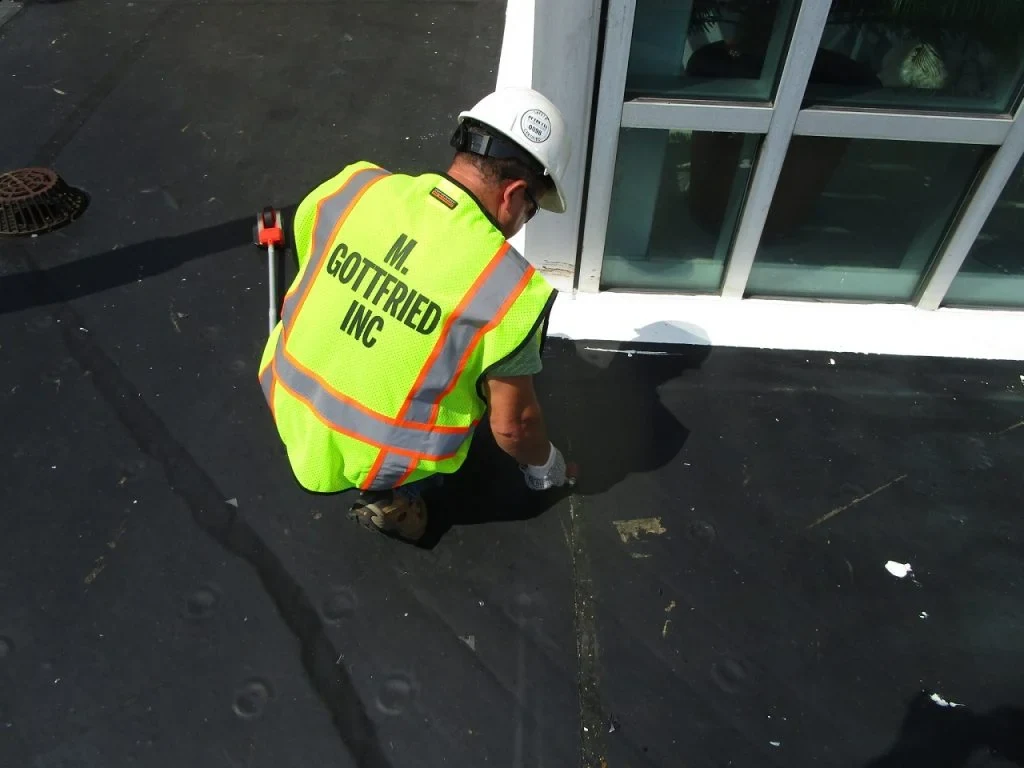
Once a core cut shows wet insulation or the membrane has hardened and lost elasticity across large areas, patching becomes a short-term fix on borrowed time, and we say so directly instead of selling a repair that will fail again within a season.
We also factor in how the roof gets used day to day. A flex building in Olyphant with light foot traffic and no rooftop process equipment can often stretch a repair further than a manufacturing plant with technicians walking the roof weekly to service condenser units. Traffic patterns wear a membrane down faster than weather alone in a lot of cases.
Frequently Asked Questions About EPDM in This Region
How long does an EPDM roof typically last around Scranton and Wilkes-Barre?
Service life depends heavily on attachment method, membrane thickness, and maintenance, but well-installed EPDM on a properly maintained building routinely outlasts many other single-ply options in this climate.
Can you match new EPDM to an existing older roof section?
Yes, when the goal is a partial replacement or expansion rather than a full tear-off, we can tie new membrane into existing EPDM with proper splicing at the transition.
Is black or white EPDM better for a manufacturing building here?
Black is the more common choice for manufacturing space in this climate because of how it performs with snow shedding and thermal movement, though a building with heavy cooling loads may still call for white.
What causes most EPDM roof leaks you see in this area?
Failed seam adhesive and deteriorated flashing around penetrations account for most of what we find, more often than failures in the membrane field itself.
Do you repair EPDM roofs installed by other contractors?
Yes, that is routine work. We inspect the existing system, core cut to check insulation condition, and give a straight answer on whether repair or replacement is the better use of the budget.
Ready to review the roof scope?
Request a Roof AssessmentRelated Commercial Roofing