PVC Roofing Systems in Scranton, PA
PVC Membrane for Grease, Chemical, and Cold-Storage Roofs
PVC isn't our default single-ply membrane, but on the right building it's the only membrane we'll recommend. Food processing and cold storage facilities feeding the I-81 distribution network need chemical resistance that TPO and EPDM don't match, and that's where PVC earns the extra line item on a bid.
Where PVC Beats TPO on NEPA Industrial Roofs
PVC's chemistry resists petroleum-based greases, oils, and certain chemical exposures better than TPO's polyolefin sheet, which matters directly on roofs downwind of kitchen exhaust, industrial process venting, or refrigeration equipment. A distribution facility handling packaged food near Hazleton's warehouse cluster, or a cold-storage building with ammonia refrigeration systems venting to the roof, both fall into this category.
We don't default to PVC across the board because it typically costs more than TPO and doesn't offer meaningful advantage on a building without that specific exposure. The membrane earns its spot when the exposure profile calls for it, not as a blanket upgrade.
That evaluation happens during our initial roof inspection, where we look for grease staining, discoloration, or membrane softening at exhaust and equipment zones on an existing roof. Those visible signs tell us more about the site's real exposure history than a facility's stated use classification does, and they shape the PVC recommendation more than a generic industry checklist would.
Grease and Exhaust Exposure at Food Processing and Cold Storage Sites
Rooftop grease deposits from kitchen or processing exhaust break down some membranes over time, softening seams and degrading the sheet at concentrated deposit zones. PVC holds up against that exposure in a way we've seen TPO struggle with on food-service and processing buildings, and it's the reason we push back when a facility manager wants to save money with a lower-cost membrane in a spot where the roof will see sustained grease exposure.
Cold-storage buildings add a second consideration: refrigeration equipment often runs continuously and generates condensation and occasional chemical exposure at the curb penetrations. PVC's weld quality around those penetrations holds up well under that combination of thermal cycling and exposure.
Hot-Air Welding in Winter Install Windows
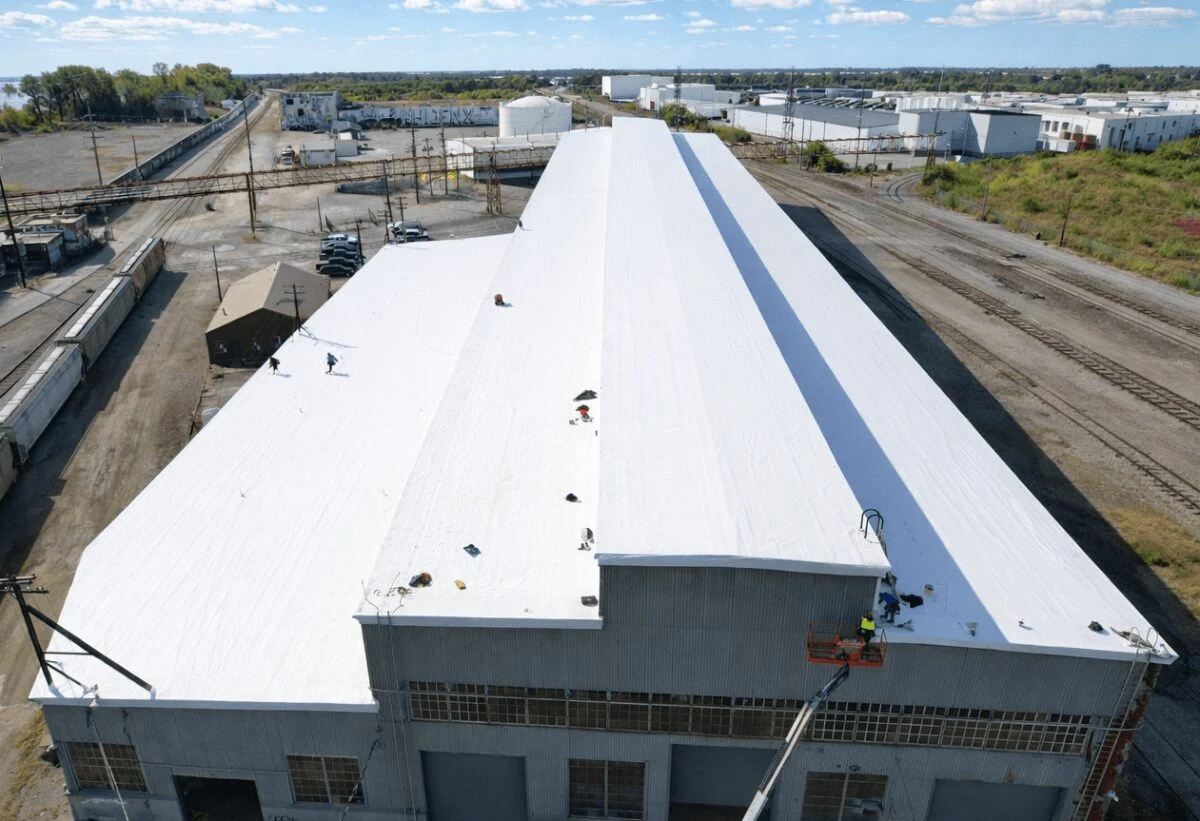
PVC welds with the same hot-air equipment as TPO, and the same cold-weather welding discipline applies - we don't push seams in marginal temperatures just to hold a schedule. NEPA's winter install window is short enough that we plan cold-storage and food-processing reroof timing around it deliberately, since these are often buildings that can't tolerate open membrane sections during an active production or storage schedule.
We stage PVC installs in tighter sections on these buildings specifically because the facility can't go dark the way a smaller retail roof sometimes can during a weather delay.
- Kitchen or processing exhaust venting directly onto the roof surface
- Ammonia or other chemical refrigeration systems with rooftop equipment
- Cold-storage buildings needing continuous weather-tight coverage during install
- Facilities with documented chemical exposure history on the existing membrane
- Rooftop equipment curbs requiring long-term weld integrity under thermal cycling
Rooftop Equipment Curbs and Long-Term Seam Integrity
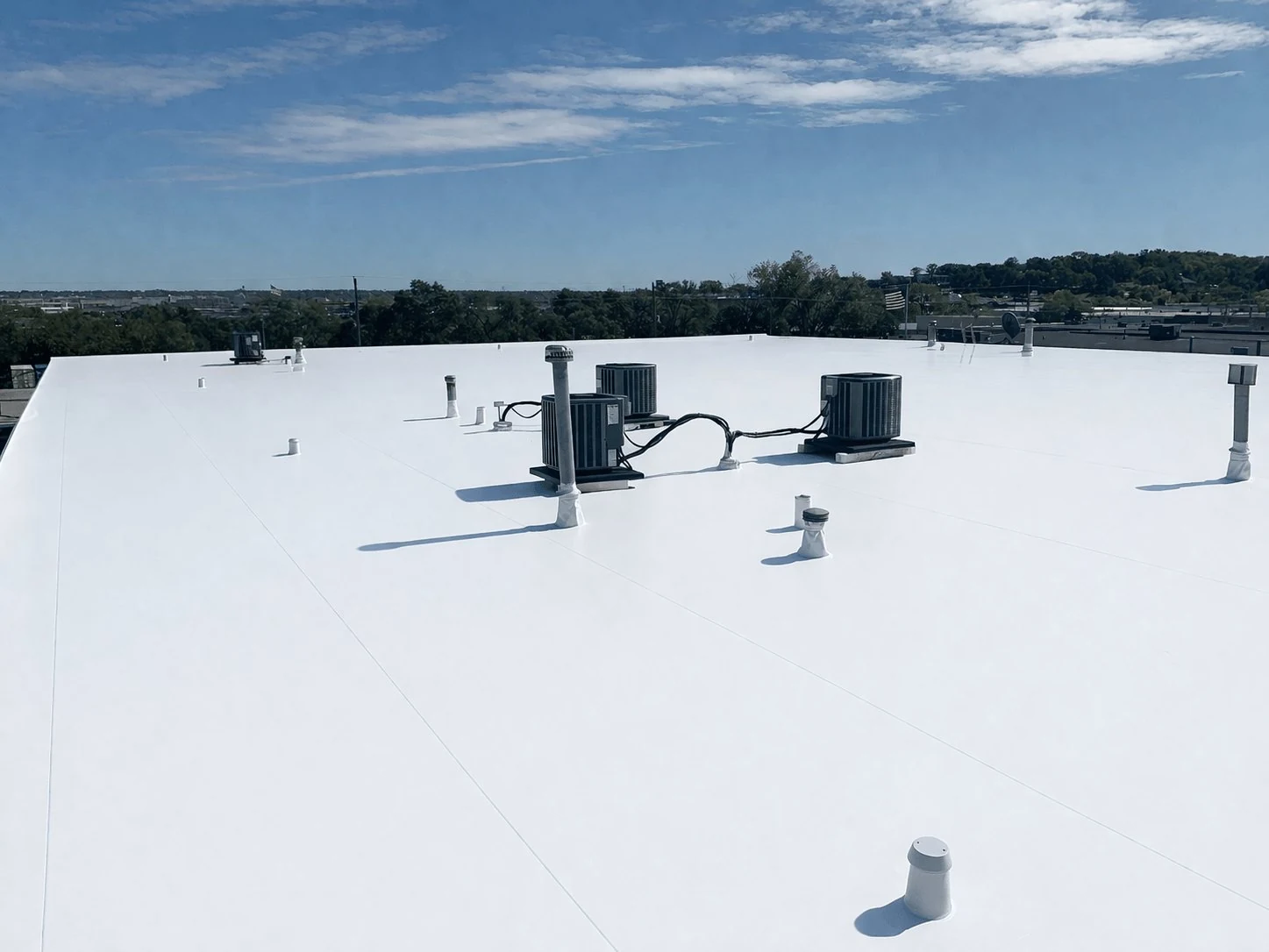
Cold-storage and food-processing roofs tend to carry more rooftop equipment per square foot than a standard warehouse, and every curb is a weld detail that has to hold for the life of the system. We detail PVC curb welds with extra care on these buildings and probe them during post-install inspection specifically, since a failed curb weld on a refrigeration unit means water tracking directly into a temperature-controlled space rather than an open warehouse floor.
Matching PVC to Fire and Life-Safety Code Requirements
Some occupancy types carry specific fire-rating requirements for the roof assembly, particularly on buildings with process equipment or specific storage classifications common at food-processing and cold-storage facilities. PVC's inherent fire resistance is a factor in some of these assembly ratings, and we check the required rating against the specific membrane and insulation package before finalizing a spec rather than assume any PVC system automatically satisfies a given code requirement.
That code review happens early in the bid process on these buildings, since a fire-rating requirement can affect insulation type and cover board selection as much as the membrane itself, and catching a mismatch after material is ordered costs real time on a facility that's counting on a tight installation window.
PVC Roofing Questions
Is PVC always the right call for a warehouse roof?
No. Most standard distribution warehouses without grease or chemical exposure do fine on TPO - see our 80-mil TPO page. PVC earns its place specifically on food processing, cold storage, and chemical-exposure roofs.
Does PVC cost significantly more than TPO?
Generally yes, and that premium is worth paying on a roof with real chemical or grease exposure and not worth paying on a roof without it.
Can PVC be welded in cold NEPA winters?
Yes, using the same hot-air welding process as TPO, within manufacturer temperature guidelines. We plan install timing and staging around that window rather than force marginal-weather welds.
How does PVC handle rooftop refrigeration equipment penetrations?
PVC's weld quality holds up well around refrigeration curbs under repeated thermal cycling, which is part of why we favor it on cold-storage buildings specifically.
Will PVC solve an existing grease-related membrane failure?
A new PVC system addresses the exposure going forward, but we also look at the source of the grease deposit - exhaust routing, hood maintenance - since a new membrane facing the same untreated exposure will degrade again over time.
Ready to review the roof scope?
Request a Roof AssessmentRelated Commercial Roofing