Manufacturing Plant Roofing in Scranton, PA
Plant Roofs Carrying Process Equipment the Original Design Never Saw
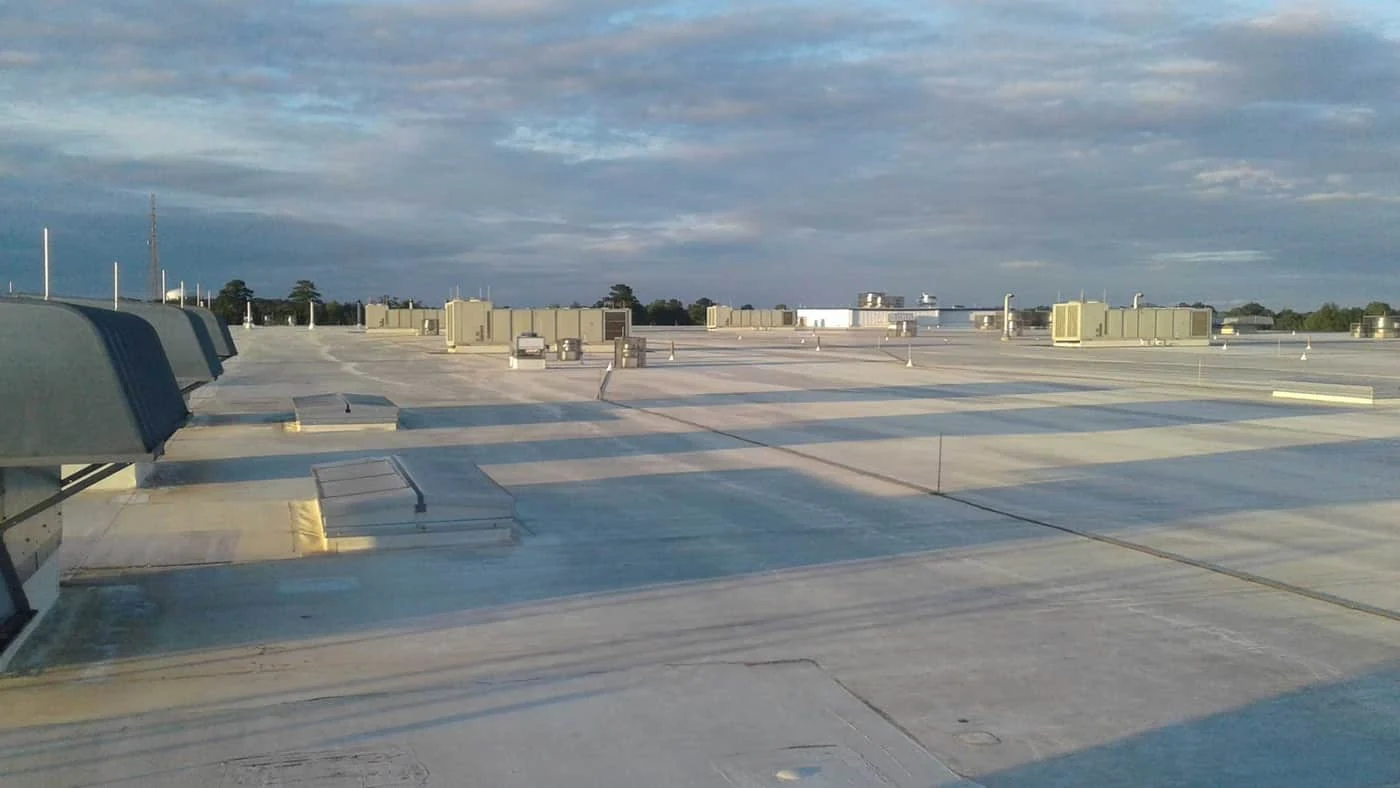
Manufacturing in this valley ranges from the electronics maintenance work at Tobyhanna Army Depot to smaller legacy plants scattered through Dunmore, where quarry industry once dominated the local economy alongside light manufacturing that's held on since. A plant roof rarely stays static once production equipment gets added, moved, or upgraded, and the roof often ends up carrying loads and penetrations well beyond what the original drawings specified.
Rooftop Process Equipment as a Roofing Problem
Exhaust stacks, makeup air units, and process venting accumulate on a manufacturing roof over years of equipment upgrades, and each addition means a new penetration cut into a membrane that was sealed for a different configuration. We treat every rooftop equipment change as a roofing event as much as a mechanical one, and we coordinate directly with a plant's maintenance team before any new equipment goes up so the roofing detail gets planned rather than patched afterward.
Older plants around Dunmore and the surrounding industrial pockets sometimes carry decades of this layered equipment history, where nobody currently on staff remembers why a particular curb or vent exists, and we document what we find during any project so the next contractor isn't starting from zero either.
Chemical and Process Exhaust Effects on Membrane Life
Process exhaust from manufacturing operations doesn't always play well with standard roofing membrane, and certain chemical vapors or grease-laden exhaust degrade some membrane types faster than a standard warehouse roof would ever experience. We evaluate what's actually venting from a plant's rooftop stacks before recommending a system, since a membrane rated for general commercial use doesn't automatically hold up under a specific chemical exposure a particular manufacturing process generates.
Where exhaust exposure is a factor, coating selection around those specific zones sometimes matters more than the membrane choice for the rest of the roof, since a localized chemical-resistant treatment near a stack can outperform a blanket upgrade across the whole field.
Tobyhanna Army Depot and Precision Facility Standards
Tobyhanna's electronics maintenance complex works to a different standard than a typical commercial manufacturing plant, given the sensitivity of the equipment serviced there and the facility security requirements that come with defense work. Roof projects near facilities like this mean working within access protocols and documentation requirements that a standard commercial job doesn't carry, and we plan for that lead time rather than assuming a typical scheduling window applies.
Precision manufacturing and electronics work generally has lower tolerance for any moisture intrusion than a standard warehouse, since a small leak over sensitive equipment can cause damage far beyond the cost of the roof repair itself. We prioritize proactive inspection over these zones rather than waiting for a visible leak to trigger a response.
- Electronics and precision manufacturing facilities
- Legacy plants with decades of equipment additions
- Light-industrial fabrication and assembly buildings
- Metal finishing and process-exhaust operations
- Plastics and composite manufacturing plants
- Government and defense-adjacent manufacturing sites
Legacy Roof Decks From an Earlier Industrial Era
A number of the manufacturing buildings in this valley date back to when the local economy ran on anthracite coal and the quarry operations that came with it, and the roof decks under those original structures were built to standards nobody uses anymore. Steel bar joist and older concrete plank decks both show up in this older building stock, and each carries different considerations for load capacity when a plant wants to add rooftop equipment decades after original construction.
We run a structural load check before recommending any significant rooftop addition on these older buildings, since a plant manager focused on production upgrades doesn't always think to verify whether the roof structure underneath can actually carry a new piece of equipment before it goes up.
Scheduling Around Production Shifts Instead of Business Hours
A plant that runs continuous production doesn't have an off-season the way some commercial buildings do, and shutting a line down to accommodate roof work is rarely on the table. We work with plant operations managers to identify which sections of the roof sit over the least sensitive parts of the production floor, sequencing work to keep material drops and foot traffic away from active process lines wherever the roof layout allows it.
Where a plant does have a planned maintenance shutdown for equipment servicing, we try to schedule roof work to overlap with that window, since a shutdown a plant is already absorbing for other reasons is a more efficient time to also address roof sections than picking an independent date that adds a second disruption to the production calendar.
Manufacturing Plant Roofing Questions We Hear
Do you coordinate with our maintenance team before new equipment installs?
Yes, we plan penetration and curb details before equipment goes up rather than patching around it afterward.
Can process exhaust damage roofing membrane faster than normal?
Some chemical and grease-laden exhaust does degrade certain membranes faster, and we evaluate actual venting conditions before recommending a system.
Do defense-adjacent facilities require different scheduling?
Yes, facilities with security or access protocols need extra lead time, and we plan projects around those requirements rather than a standard commercial timeline.
How do you handle older buildings with decades of equipment additions?
We document undocumented curbs and penetrations we find during any project so the roof's history is recorded going forward.
Can an older roof deck handle new rooftop equipment?
We check structural load capacity before any significant addition, since older decks weren't always built for modern equipment weights.
Ready to review the roof scope?
Request a Roof AssessmentRelated Commercial Roofing