
Commercial Roofing Contractors Clarks Summit, PA
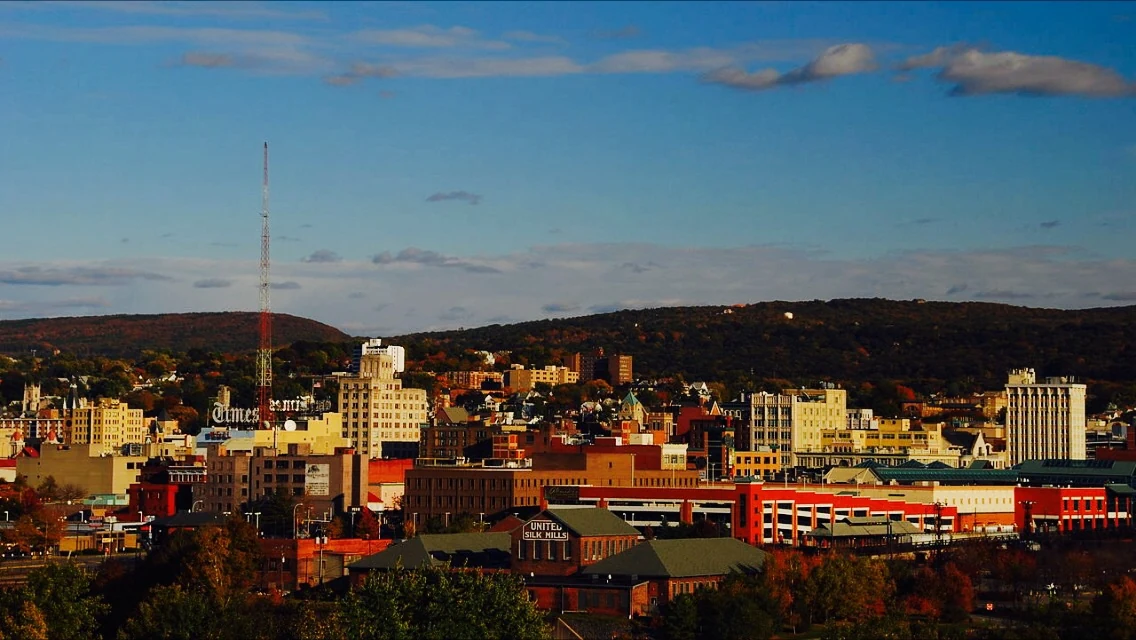
Commercial Roofers in Clarks Summit
Commercial roofing in Clarks Summit should begin with a documented assessment of membrane condition, seams, flashings, drainage, penetrations, and moisture before repair, coating, or replacement is selected. Clarks Summit anchors the Abingtons, the string of communities north of Scranton along Business Route 6 and Route 11 that have grown steadily as residential development has pushed up the ridge. The retail strip through town and the professional office buildings around it are a different scale of commercial roof than the industrial parks farther south, and Commercial Roofing of Scranton treats them that way: smaller roofs, tighter sites, and often closer neighbors to keep in mind during a job. A five-figure square-footage retail box down in Wilkes-Barre Township and a two-thousand-square-foot storefront up here call for a completely different approach to the same trade.
A Retail Strip That's Grown With the Town
The commercial corridor through Clarks Summit has filled in over the years with a mix of older storefront buildings downtown and newer strip retail and office construction farther out along the business route. That mix means we see everything from decades-old built-up roofing on a downtown storefront to recently installed TPO on a newer medical or professional office building, sometimes on adjacent parcels. Older downtown storefronts often share party walls and tight lot lines with neighboring buildings, which changes how we stage material and equipment compared to a standalone suburban building with open space around it.
Professional Office Buildings: Not Always Flat
Unlike the warehouse and big-box roofs dominating the valley floor, a number of the office buildings around Clarks Summit, particularly newer medical and professional buildings, use a low-slope design that isn't perfectly flat, sometimes with architectural elements like dormered sections or steeper accent roofs over an entryway. Those transitions between roof pitches are where we find the most trouble: valley flashing and step flashing at a pitch change take more careful detailing than a straightforward flat membrane field, and it's common for that detail to have been under-built at original construction.
Tenants in these buildings, professional practices, small medical offices, financial services, tend to be sensitive to noise and to any interruption of parking access, given how visible and pedestrian-facing many of these buildings are along a Main Street-style corridor.
Working a Tight Site Without Disrupting the Block
A downtown storefront roof job in Clarks Summit doesn't have the staging room a warehouse job in Pittston Township does. We plan material delivery, dumpster placement, and crew parking around what a tight downtown lot can actually accommodate, and we coordinate with neighboring businesses so a reroof next door doesn't block their customer parking or entrance for longer than necessary.
- Step flashing failure at pitch transitions on architectural roof sections
- Aged built-up roofing on older downtown storefronts
- Party-wall flashing wear between adjacent buildings
- Ponding on flatter sections behind steeper accent roofs
- Gutter and downspout blockage from ridge-top tree cover
- Membrane wear near rooftop units on newer office buildings
Seasonal Traffic Along the Business Route
Clarks Summit sees heavier weekend and fall-foliage traffic along Business Route 6 than a typical valley commercial corridor, as visitors headed toward the Endless Mountains pass through downtown. We factor that into scheduling for any job that needs a lane closure or curbside staging, favoring weekday mornings over weekend afternoons when the sidewalks and parking along Main Street get busier.
Winter storms move through the ridge with more snow accumulation than the valley floor sees on the same system, similar to the pattern at Mountain Top on the opposite side of the region. We account for that when scheduling exterior work between November and March, building extra weather contingency into the timeline rather than assuming valley conditions apply here too.
Keystone College and the school district facilities nearby add a handful of institutional roofs to the mix as well, typically larger single-ownership buildings that let us plan a full reroof in one continuous phase rather than the piecemeal scheduling a downtown block of separately owned storefronts requires.
Questions From Clarks Summit Business and Office Owners
Can you work on a downtown storefront with no staging area beside it?
Yes, we plan delivery and equipment staging around what the site actually allows, including tight downtown lots with shared walls and limited access. We'd rather solve that problem on paper before the truck shows up than improvise on the block once a delivery truck is already sitting in the road with nowhere to go.
Do the architectural roof sections need a different repair approach than a flat roof?
Yes, pitch transitions need step and valley flashing detail that a flat membrane field doesn't require, and that's usually where we find the underlying problem on these buildings. We inspect those transitions specifically rather than treating the roof as one uniform surface.
Will roof work block customer parking during business hours?
We plan around it. Dumpster and material placement gets worked out with you in advance so customer access stays open as much as possible.
Why does an older downtown building's roof condition vary so much from a newer building nearby?
Age and construction era make the difference: older built-up roofing on a downtown storefront wears differently than a modern TPO system on a newer office building, even on the same block.
Does tree cover along the ridge cause maintenance issues?
Yes, gutters and downspouts on buildings near heavier tree cover need more frequent clearing to avoid backup, and we flag that during inspections. Fall is the season we watch closest for this, once leaf drop picks up along the ridge.
Ready to review the roof scope?
Request a Roof AssessmentRelated Commercial Roofing